
Night & overnight care
Sleeping nights
A carer sleeps in the home and is available if needed: for the bathroom, for reassurance, or if someone becomes disorientated. Most nights they are not called on. That is the point.
Waking nights
The carer stays awake and on duty throughout: repositioning, continence support, medication at set times, monitoring breathing or confusion. Suited to advanced dementia, end-of-life care and recovery from major surgery.
A typical night
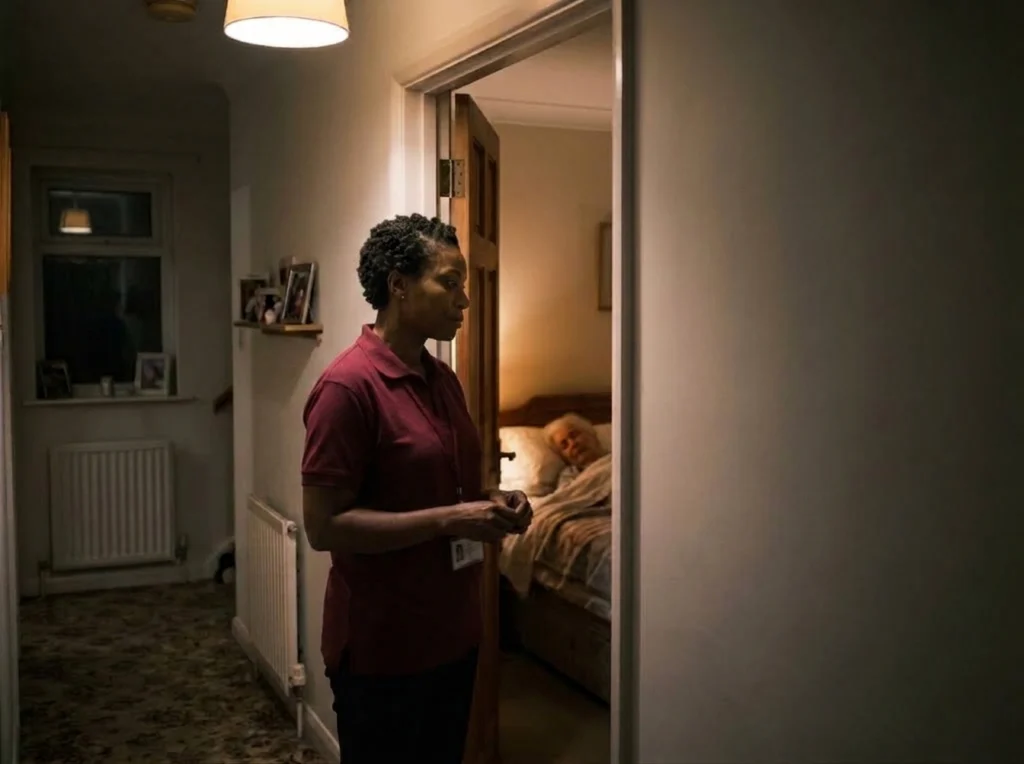
A sleeping-night visit usually starts with a settling routine in the evening, then the carer is available in the home overnight and again for a morning routine; most nights, they are not called on, which is exactly the reassurance families are paying for. A waking-night visit is more active throughout: scheduled checks, repositioning at agreed intervals, and being awake and alert if something changes, handed over to day staff each morning with written notes.
How we train for this
Night carers complete the same Care Certificate and moving and handling training as day staff, plus specific training in recognising the early signs of a deteriorating condition overnight (laboured breathing, new confusion, skin changes) when there is no one else awake in the house to notice. Waking-night staff are never expected to also sleep on shift; the two roles are staffed and paid differently for a reason.
When this might not be the right fit
If the need is genuinely 24 hours, not just overnight, a rotating 24-hour team or live-in care usually makes more sense than adding night cover on top of separate day visits. We would rather point that out at assessment than sell you two services stitched together when one continuous package would serve you better.
Who this is for
Families exhausted by broken nights, people at risk of night-time falls, and anyone whose needs do not stop at bedtime.
What is included
- Sleeping night cover, typically 10pm to 7am
- Waking night cover with hourly checks as agreed
- Repositioning and pressure-area care
- Night-time continence and toileting support
- Reassurance for people who wake disorientated
- Handover notes each morning for family and day staff
Talk it through first
A free home assessment with no obligation. We will tell you what we would recommend and what it would cost.
Common questions
Night & overnight care: what people ask
How do I know whether I need sleeping or waking night cover?
It comes down to how often something actually needs doing overnight. Occasional reassurance or help getting to the bathroom usually points to sleeping nights; regular repositioning, monitoring or medication at set times points to waking nights. We will recommend one honestly at assessment rather than defaulting to the more expensive option.
What does night care cost, and can it be funded?
It is priced differently from sleeping to waking nights given the different level of engagement required. See paying for care for how council funding, direct payments and NHS routes can apply to night care the same as any other package.
Can night care be added to an existing daytime package?
Yes, it is one of the most common ways a package grows, usually after a fall, a hospital discharge, or a condition that has started to affect sleep and safety overnight.
Will the same carer come every night?
We build rotas for consistency wherever possible, the same as with daytime visits: you should know who is coming and be told in advance when it is someone different.
Often arranged alongside
Personal care
Discreet, dignified help with washing, dressing, continence and medication, delivered the way you would do it yourself.
Visiting care at home
Scheduled visits from thirty minutes upwards: practical help, companionship and a reliable pair of eyes on how someone is doing.
Live-in & 24-hour care
A carer living in the home, or a rotating team providing round-the-clock cover: a genuine alternative to a care home.