
Children & young people’s care
Care that fits around a family
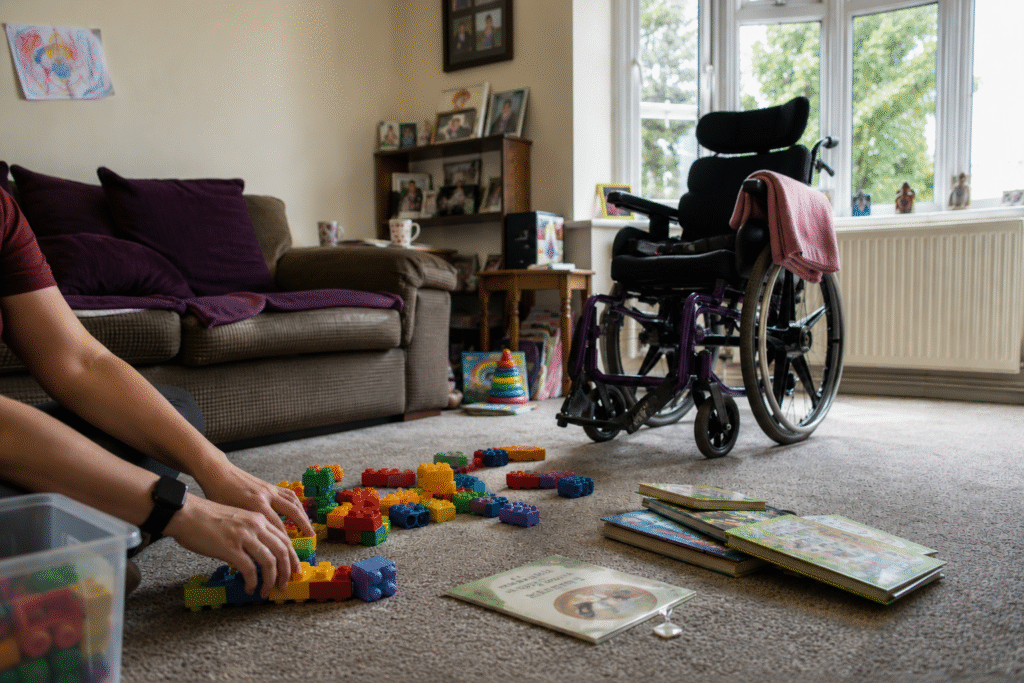
Supporting a disabled child is not the same as supporting an adult. Siblings, school, therapy appointments and the parents’ own working lives all sit in the same twenty-four hours. We plan around the family as a whole.
Continuity above all
Children and young people need to know who is coming through the door. We keep the team small and consistent, and we make transitions — new carers, new routines, the move towards adult services — planned rather than abrupt.
A typical week
A common pattern is support built around school and therapy — help in the morning before school, a sitting service so parents can attend appointments or simply rest, and planned overnight or weekend respite worked around the family’s existing routine rather than a generic template. What support looks like varies enormously by age and need, which is exactly why it is planned with the whole family rather than assumed from a diagnosis.
How we train for this
Carers supporting children and young people hold the same core training as every other role, plus specific training in safeguarding children, working within a family home rather than a clinical setting, and communicating with children directly and age-appropriately, not just with their parents.
Who this is for
Families of disabled children and young people, and local authority children’s services teams commissioning packages.
What is included
- Personal care and daily living support for children 0–18
- Overnight and sitting service so parents can sleep
- Planned short breaks and holiday respite
- Support to access school, therapy and activities
- Close working with children’s social care and health teams
- Planned transition into adult services at 18
Talk it through first
A free home assessment with no obligation. We will tell you what we would recommend and what it would cost.
Common questions
Children & young people’s care: what people ask
How is care for a disabled child funded?
Often through a local authority children’s services package, an Education, Health and Care Plan, or Continuing Care funding where health needs are significant — occasionally privately. See paying for care for the general routes, and ask us if you are not sure which applies; children’s funding works differently from adult social care in places.
What happens when my child turns 18?
We plan the transition into adult services in advance rather than let it happen abruptly at a birthday — new routines and, where possible, familiar carers carried across, working alongside children’s and adult social care teams during the handover.
Can carers support my child at school or during activities?
Yes, where that is part of the agreed plan — support to access school, therapy appointments and activities is one of the more common requests, not an exception.
Do local authority children’s services teams commission directly with you?
Yes — we work with children’s services commissioners the same way we work with adult social care, alongside privately funded families.
Often arranged alongside
Personal care
Discreet, dignified help with washing, dressing, continence and medication — delivered the way you would do it yourself.
Visiting care at home
Scheduled visits from thirty minutes upwards — practical help, companionship and a reliable pair of eyes on how someone is doing.
Live-in & 24-hour care
A carer living in the home, or a rotating team providing round-the-clock cover — a genuine alternative to a care home.